MRL Tech Solutions

Live online courses in AI, machine learning and Python

Six programmes, from using AI tools well to building and deploying your own AI applications. Every session is live, two hours long, and everything is built in the session with you typing.

  • Live with a trainer, not pre-recorded
  • 2-hour sessions, weekday evenings or weekends
  • Free tools, no paid subscriptions
  • A certificate that names what you built

Pick a starting point

The first two need no background at all. Machine learning is taught before generative AI, because knowing how a model is trained makes the rest land properly.

CourseLengthYou needYou willFee
AI Tools Mastery6 sessions, 12 hrsNothing technicalUse AI well in your daily work₹1,499
Python Programming10 sessions, 20 hrsNothingLearn to program properly₹1,999
Machine Learning & Deep Learning12 sessions, 24 hrsBasic PythonBuild and evaluate real models₹2,999
Generative AI & LLM Development15 sessions, 30 hrsBasic PythonBuild and deploy AI applications₹3,499
Complete AI Programme30 sessions, 60 hrsPython basics, or take Python firstGo from beginner to job-ready₹5,999
Internship Programme15 days, 30 hrsNothingComplete your internship requirement₹2,499

No coding

AI Tools Mastery

₹1,499

Six sessions on using AI tools properly for writing, research, teaching material, slides, data and the tasks you repeat every week. Bring a real piece of your own work each time and leave with it finished.

  • 6 sessions, 12 hours
  • 2 hours a session
  • No technical background
  • Free tools throughout
Session-wise syllabus
SessionTopicWhat you do
1What the main assistants are each good at, and where each falls over. Writing a prompt that works first time. Spotting a confident wrong answer.A prompt library for your own weekly work
2Writing and editing: drafting, restructuring, tightening, and adapting one piece for different readers.A document of yours, rewritten and compared
3Reading and research: long PDFs, comparing papers, building a summary you can defend, and checking claims rather than trusting them.A literature summary with sources verified
4Slides and images: notes into a deck, images that are usable, teaching and promotional material made quickly.A presentation built from your own notes
5Data without code: asking questions of a spreadsheet, cleaning it, and making charts that answer something.An analysis of your own data
6Automating the repeats: the weekly tasks worth handing over, and setting one up end to end.One automation, running

Suits: faculty, research scholars and working professionals whose week goes on writing, reporting and preparing material.

On using AI in academic work. Session 3 covers what is appropriate and what is not: AI as a reading, drafting and editing aid, not as an author, and what journals currently expect you to disclose.


Register for AI Tools Mastery

Start here if you have never coded

Python Programming

₹1,999

From your first line of code to a working application. Every session ends with something that runs, and the course finishes with a project you deploy.

  • 10 sessions, 20 hours
  • 2 hours a session
  • No prior coding
  • Certificate
Session-wise syllabus
SessionTopicWhat you build
1Setting up Python and Colab. Syntax, variables, numbers and strings: indexing, slicing and the string methods you will actually use.Your first working scripts
2Lists, dictionaries, tuples and sets, and knowing which one a problem calls for. Reading and writing files.A program that reads a file and reports on it
3Decisions and repetition: conditionals, loops, and writing functions that do one thing well.A data-processing script
4Errors and objects: try and except, custom exceptions, then classes, objects, inheritance and the dunder methods.An object-oriented library system with error handling
5NumPy and pandas for real data: loading, cleaning, filtering, merging and grouping.A messy dataset, cleaned and summarised
6Matplotlib and Seaborn: charts that answer a question rather than decorate a slide.An exploratory analysis with charts
7The standard library worth knowing: collections, datetime, math, random, os. Regular expressions, and how to debug rather than guess.A utility that solves a real problem of yours
8The web: HTTP requests, working with APIs, parsing JSON, and web scraping, including where the legal lines are.A scraper and an API client
9Files and databases: CSV, Excel and PDF handling, basic image processing, and connecting Python to SQLite.A script that processes files into a database
10Putting it together: structuring a project, testing it, and deploying it so someone else can use it.A complete application, deployed

Suits: school and college students, and professionals who need Python for data, automation, or as the foundation for the AI courses below.

Register for Python Programming

Track 1

Machine Learning & Deep Learning

₹2,999

The models, and the judgement to use them. Twelve sessions from a first regression to convolutional networks, with as much time on evaluating a model honestly as on training one.

  • 12 sessions, 24 hours
  • Basic Python needed
  • Scikit-learn, PyTorch, Keras
  • Certificate
Session-wise syllabus
SessionTopicWhat you build
1What machine learning is and is not. Supervised, unsupervised and reinforcement learning. The complete workflow, start to finish.A first model, end to end
2Data preparation: cleaning, scaling, encoding categories, and splitting data. Data leakage, and how it quietly ruins results.A prepared dataset you can trust
3Regression: linear regression, gradient descent, loss functions, and evaluating with MAE, RMSE and R².A prediction model on real data
4Classification: logistic regression, decision trees and k-nearest neighbours. Confusion matrices, precision, recall and F1.A classifier, with its errors understood
5Random forests and support vector machines, and where each one wins.Two models compared on the same problem
6Doing it properly: cross-validation, the bias-variance tradeoff, regularisation, hyperparameter tuning and ensembles.A tuned model, and evidence the tuning helped
7Unsupervised learning: k-means clustering, and what clusters do and do not tell you.Customer segmentation on real data
8Neural networks from first principles: neurons, layers, activations, forward propagation and backpropagation, built in NumPy.A neural network written from scratch
9PyTorch and Keras: the training loop, evaluation, and reading someone else's model code.The same network, rebuilt in a framework
10Convolutional networks and image classification. Transfer learning: using a trained model instead of starting over.An image classifier on your own images
11Sequences: recurrent networks and LSTMs for time series and text. Text processing and sentiment analysis.A forecast and a sentiment model
12Computer vision with OpenCV and YOLO: face detection and real-time object detection. Then deploying a model with Streamlit.Object detection from a webcam, and a deployed model

Suits: students starting in AI or data science, scholars who need models for their research, and professionals moving into an AI role.

Register for Machine Learning & Deep Learning

Track 2, most in demand

Generative AI & LLM Development

₹3,499

Fifteen sessions from a first API call to a deployed AI application with your name on it: prompting, LangChain, retrieval over your own documents, agents that use tools, and a capstone you can show an employer.

  • 15 sessions, 30 hours
  • Basic Python needed
  • Gemini, Groq, LangChain, ChromaDB, Gradio
  • Deployed to Hugging Face Spaces
Session-wise syllabus
SessionTopicWhat you build
1How generative AI sits inside AI as a whole. What large language models are doing underneath. Calling the Gemini and Groq APIs.Your first API call, and a simple chatbot
2Python for AI development: functions, classes, object-oriented basics and handling errors that come back from an API.A chatbot class that remembers the conversation
3Prompt engineering: zero-shot, few-shot and chain-of-thought. Prompt templates, and building a library you reuse.A tested prompt library
4System prompts and conversational design. Gradio: turning a script into something another person can use.An interactive AI web app
5LangChain fundamentals: prompt templates, the expression language, and chaining steps together.A multi-tab AI toolkit
6Memory: buffer, window and summary memory, and choosing between them.A chatbot that remembers across sessions
7Retrieval-augmented generation: loading documents, embeddings, and ChromaDB.A document question-answering system
8Advanced RAG: PDF upload and processing, chunking strategies that work, and answers that cite their sources.PDF Q&A with citations
9Putting a RAG system together properly, with retrieval and generation as one architecture.A four-tab study assistant
10AI agents: what separates an agent from a chatbot. Tools, the tool decorator, and the reasoning loop.A personal assistant agent
11Agents with real tools: web and Wikipedia search, multi-tool workflows, and handling the errors agents make.A research assistant agent
12Multi-agent systems: the writer, critic and editor pattern, planning, and agents handing work between them.A multi-agent workflow, and your capstone plan
13Capstone, part one: project setup and the core features.A working prototype
14Capstone, part two: refining it and deploying to Hugging Face Spaces.A live app anyone can open
15Demo day. Presenting your project, adding it to your LinkedIn portfolio, and preparing for the interview questions these roles ask.A demo, a portfolio entry, and interview preparation

Suits: students and professionals who want to build AI applications rather than only use them.

You finish with something to show. A live application on Hugging Face Spaces, a LinkedIn portfolio entry, and preparation for the questions these interviews ask. Most courses stop at the last topic.

Register for Generative AI & LLM Development

Both tracks, plus a joint capstone

Complete AI Programme

₹5,999

Machine Learning & Deep Learning followed by Generative AI & LLM Development, taught in that order, and finishing with a joint capstone that uses both. Understanding how a model learns is what makes the second half land properly.

  • 30 sessions, 60 hours
  • No prior AI experience
  • Three sessions you cannot book separately
  • Capstone, demo day and career preparation
How the programme runs
PartCoversSessions
Track 1Machine learning, model evaluation, neural networks, deep learning, computer vision and deployment: the full Machine Learning & Deep Learning syllabus above.12 sessions
Track 2Generative AI, prompt engineering, LangChain, RAG, agents and multi-agent systems: the full Generative AI & LLM Development syllabus above.15 sessions
Joint capstoneA project that uses both halves: a model you trained, behind an AI interface people can talk to. Built, deployed and presented.3 sessions

Suits: anyone going from no AI background to employable. It is also the version departments usually choose when running this as a value-added course.

Machine learning comes first on purpose. Going straight to LLMs without knowing how a model is trained and evaluated is how people build things they cannot debug. The final three sessions exist only here.

Register for Complete AI Programme

For your college requirement

Internship Programme

₹2,499

Fifteen days, two hours a day, ending with a project you build and present. Built for the internship your college asks for, with a certificate that names the dates, the topics and the work you did.

  • 15 days, 30 hours
  • 2 hours a day
  • A mini-project every day
  • Internship certificate
Day-wise plan
DayTopicMini-project
Day 1Introduction to AI, Google Colab and Python basicsData preprocessing on a real dataset
Day 2Introduction to machine learning, and the workflow end to endYour first trained model
Day 3Regression: linear and multiple regressionA prediction model on real data
Day 4Decision trees and random forestsTree-based models compared
Day 5Classification algorithmsLogistic regression and random forest classifiers
Day 6Unsupervised learning and clusteringCustomer segmentation with k-means
Day 7Reinforcement learning basicsA reward-based game agent
Day 8Deep learning and neural networksAn ANN trained on a large dataset
Day 9Convolutional networks for imagesAn image classifier
Day 10OpenCV basicsFace detection
Day 11OpenCV and YOLOLive object detection from a webcam
Day 12Natural language processing: text preprocessing and tokenisationSentiment analysis
Day 13Generative AI and large language modelsA working Gen AI environment, and a chatbot with Groq
Day 14Project day: you build, with the trainer on callYour chosen project, finished
Day 15Presentation dayYou present and demonstrate your project

Suits: students who need a documented internship. It also runs on campus for a whole class: see workshops for colleges.

Certificates name what you did. Dates, topics covered and the project completed, not only attendance. That matters when a placement officer or an interviewer reads it.

Register for Internship Programme

How every course runs

Live, small batches

A trainer teaching in real time. You can stop them and ask.

Two hours at a time

Long enough to build something, short enough to hold attention after a working day.

You type everything

No watching someone else's screen for two hours. Code runs in Google Colab, so any laptop works.

Recordings for revision

If you miss a session, you get the recording and the notebook the same day.

Help between sessions

A WhatsApp group for the batch, answered by the trainer.

You finish with proof

A project you built, and a certificate naming what you did.

Your trainers

Every session is taught live by one of the two people who also run MRL's college workshops.

Portrait of Asborn T

Asborn T

AI, ML and IoT educator

16 years in technical education. Teaches artificial intelligence, machine learning, generative AI, large language models, agentic AI and IoT to engineering students, faculty and corporate teams.

Leads: Machine Learning & Deep Learning, Generative AI & LLM Development, AI Tools Mastery, and AI workshops.

Portrait of Ranjith Kumar V

Ranjith Kumar V

Full stack developer (Java) and IoT engineer, B.E. Computer Science

Three years at MRL Tech Solutions building and teaching real systems. Works across Java full stack development, robotics, the Internet of Things, Python, web development, and databases with SQL and MySQL.

Leads: Python Programming, and IoT, robotics and web development workshops.

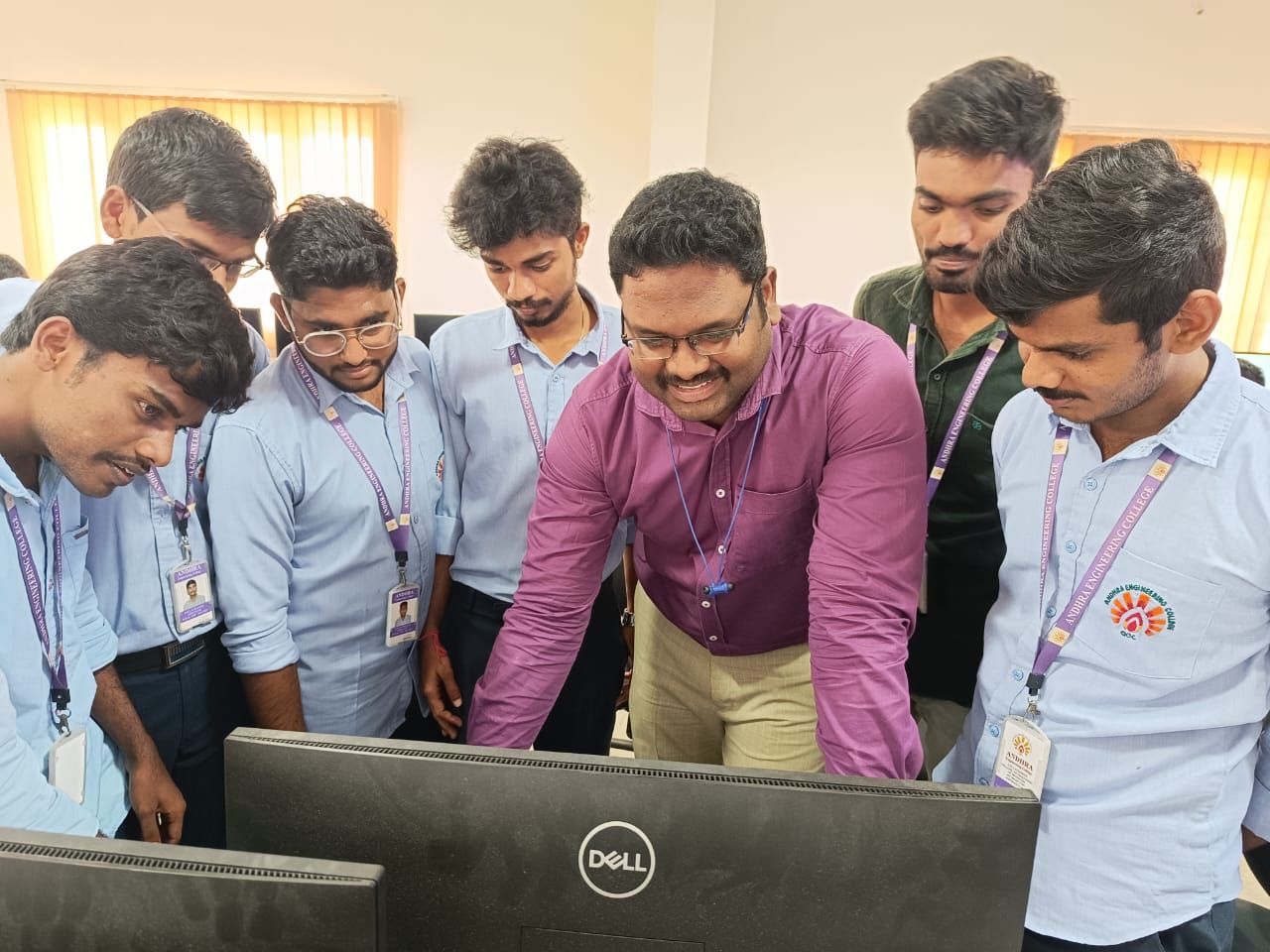
Asborn working through a problem with a group of students at a computer
Asborn working through a model with students at Andhra Engineering College.
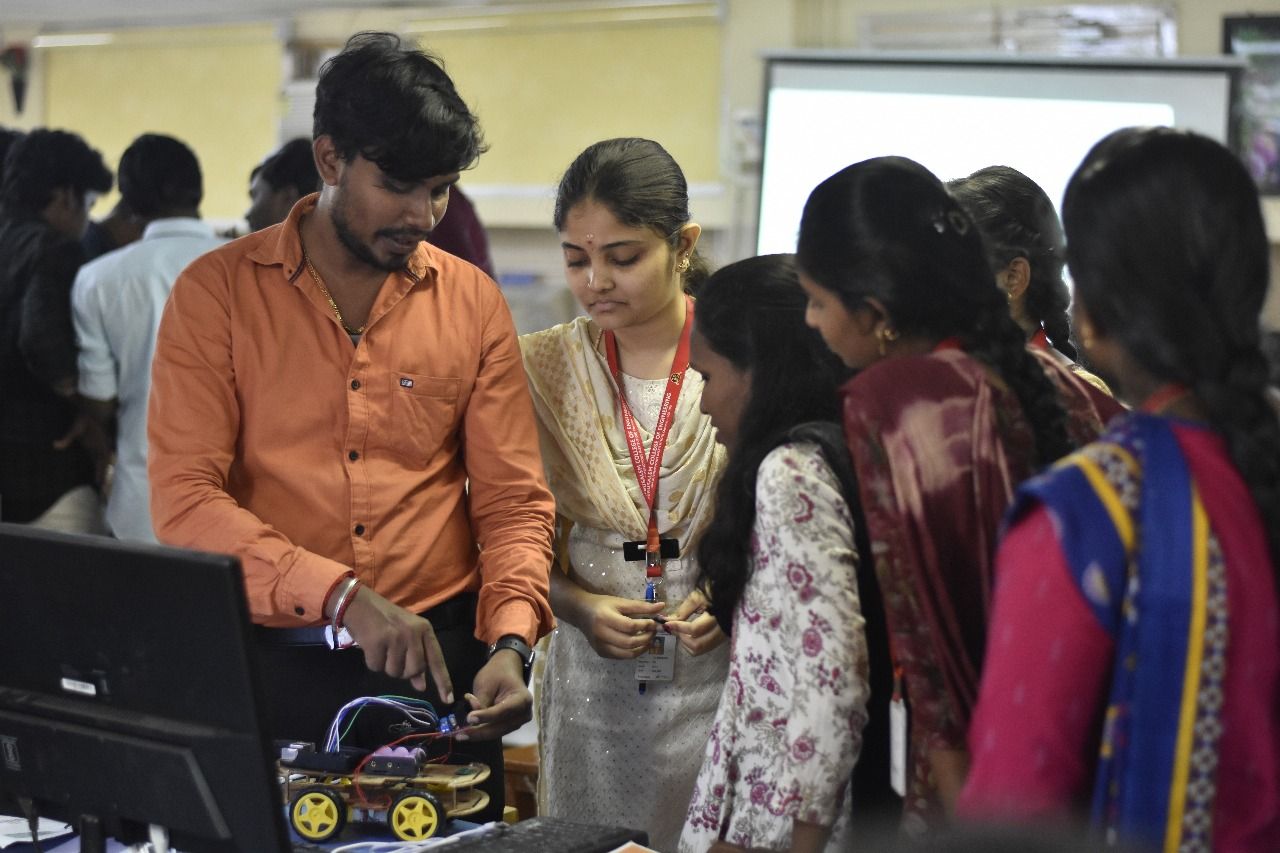
Ranjith showing students the wiring of a robot car kit
Ranjith taking students through a robot car build in an IoT workshop.

Colleges where we have taught

The same trainers and material, delivered on these campuses as workshops, value-added courses and internships.

  • Andhra Engineering College logoAndhra Engineering College
  • DMI College of Engineering logoDMI College of Engineering
  • Gojan School of Business and Technology logoGojan School of Business and Technology
  • Kings Engineering College logoKings Engineering College
  • New Prince Shri Bhavani College of Engineering and Technology logoNew Prince Shri Bhavani College of Engineering and Technology
  • Panimalar Engineering College logoPanimalar Engineering College
  • Prince Shri Venkateshwara Padmavathy Engineering College logoPrince Shri Venkateshwara Padmavathy Engineering College
  • S.A. Engineering College logoS.A. Engineering College
  • SRM University logoSRM University
  • Saveetha Engineering College logoSaveetha Engineering College
  • Saveetha University logoSaveetha University
  • Sri Manakula Vinayagar Engineering College logoSri Manakula Vinayagar Engineering College
  • Sri Sai Ram Institute of Technology logoSri Sai Ram Institute of Technology
  • St. Joseph College of Engineering logoSt. Joseph College of Engineering
  • St. Joseph's College of Engineering logoSt. Joseph's College of Engineering
  • Valliammai Engineering College logoValliammai Engineering College
  • Vel Tech Rangarajan Dr. Sagunthala R&D Institute of Science and Technology logoVel Tech Rangarajan Dr. Sagunthala R&D Institute of Science and Technology

Want this for your whole department? See workshops for colleges.

Register

Fill this in and press the button. It opens WhatsApp with your details written out. We reply with the next batch dates and payment details, usually the same day.

Email us instead

Questions people usually ask

Which course should I start with?

If you don't want to code at all: AI Tools Mastery. If you want to build but have never programmed: Python Programming first. If you can already write Python: Machine Learning & Deep Learning, then Generative AI & LLM Development, or the Complete AI Programme, which is both together plus a joint capstone.

Do I need a powerful laptop?

No. Code runs in Google Colab in your browser, so any laptop with a stable internet connection works. A phone is not enough for the hands-on work.

Will I need to pay for AI tools or API keys?

No. We teach on Gemini and Groq, both of which have free tiers generous enough for the whole course, and we show you how to watch your usage.

What if I miss a session?

You get the recording and the notebook the same day, and you can bring questions to the next session or the batch WhatsApp group.

Is the internship certificate accepted by colleges?

The certificate is issued by MRL Tech Solutions Pvt Ltd and names the dates, topics and project. Most colleges accept it for the internship requirement, but check your department's rules before you register.

Can our college book a course for a whole class?

Yes. Any of these runs as a batch for a department, online or on campus. See workshops for colleges.

Not sure which course fits?

Tell us what you know already and what you want to be able to do. We will suggest a starting point, honestly, including when the answer is a free resource instead.